Best Vitiligo Surgery in Surat, Ahmedabad & Rajkot
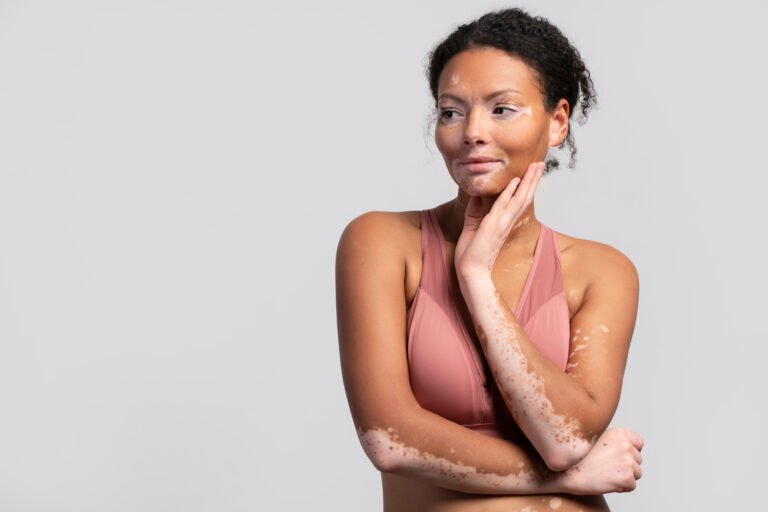
Vitiligo is a skin condition in which white patches appear due to loss of pigment (melanin). Vitiligo Treatment focuses on restoring skin color, stopping the spread of patches, and improving overall skin appearance.
With advanced dermatological techniques like medical therapy, laser treatment, and surgical options, patients can achieve visible improvement and better skin tone balance. Early diagnosis and proper treatment planning play a key role in effective results.
You may be an ideal candidate if you:
Have white patches on skin (face, hands, body)
Notice gradual spread of depigmentation
Want to restore natural skin tone
Are looking for medical or aesthetic improvement
Are in good overall health
Have realistic expectations regarding results
Step-by-step process:
Skin Evaluation & Diagnosis
The doctor examines affected areas and condition stage.
Customized Treatment Plan
A suitable combination of therapies is selected.
Treatment Methods
Topical medications to stimulate pigmentation
Light therapy (phototherapy) to restore melanin
Laser treatment for targeted areas
Surgical options (skin grafting) in stable cases
Treatment Execution
Procedures are performed under medical supervision.
Follow-up & Monitoring
Regular sessions and progress tracking are essential.
Helps restore skin pigmentation
Reduces visibility of white patches
Slows or stops spread of condition
Improves overall skin appearance
Boosts confidence and self-esteem
Safe and medically supervised treatments
Before undergoing treatment, you should:
Avoid excessive sun exposure
Inform your doctor about medical history and medications
Avoid self-medication or home remedies
Maintain healthy skin care routine
Stay consistent with doctor’s advice
Keep realistic expectations (gradual results)
Experienced Surgeon
Advanced medical and laser treatment options
Personalized treatment plans based on condition
Safe, hygienic, and modern facilities
Focus on long-term skin improvement
Continuous support and follow-up care
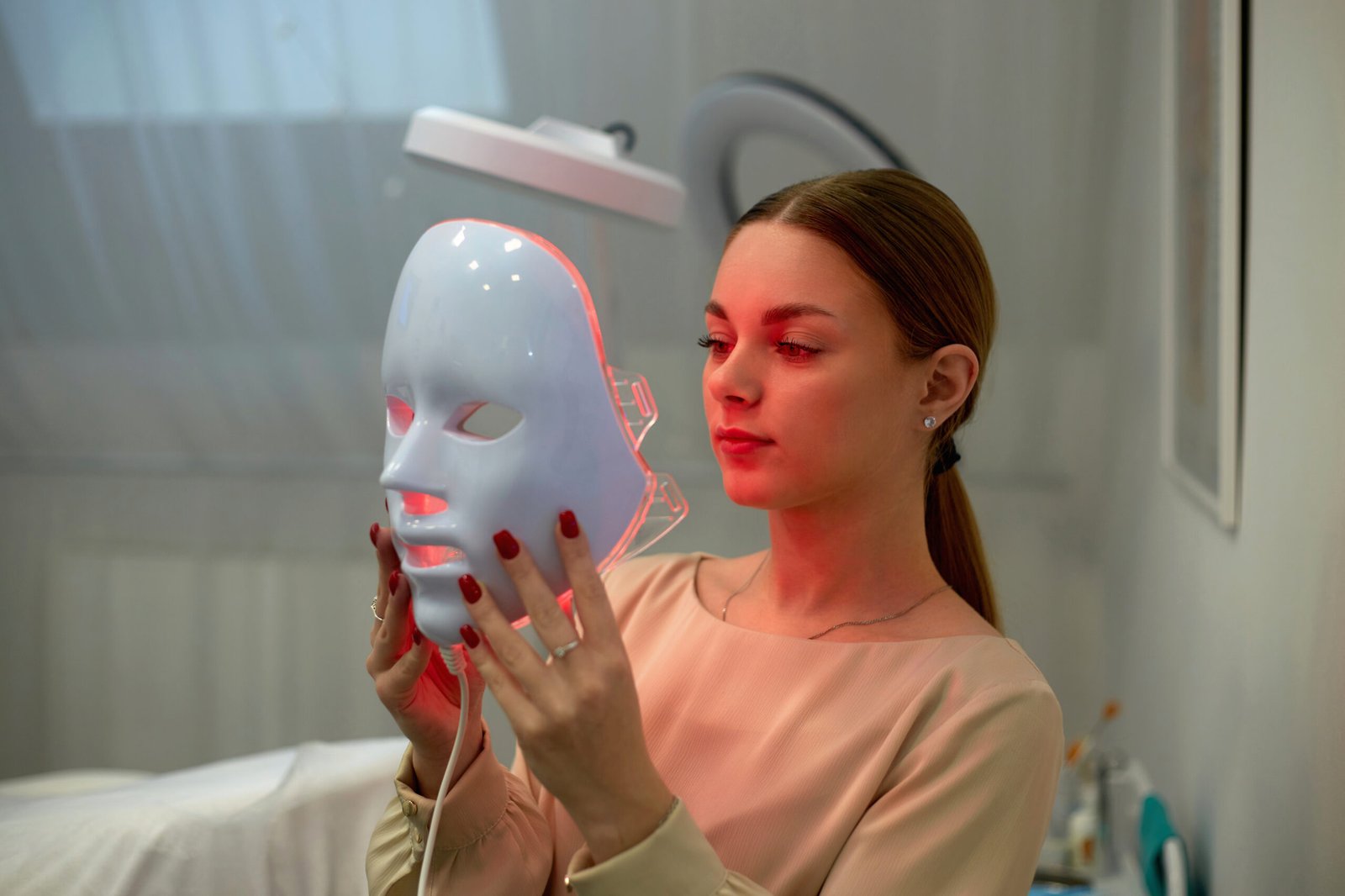
Intense Pulsed Light Therapy (IPL), also known as phototherapy, is an effective treatment option for vitiligo. This therapy uses Ultraviolet B (UVB) rays to help slow down or stop the spread of vitiligo patches and support skin repigmentation. For best results, consistency is essential. Typically, two IPL sessions per week are recommended. Visible improvement may take up to six months, depending on the individual’s condition. Regular and continuous treatment plays a key role in achieving safe, effective, and long-lasting results.
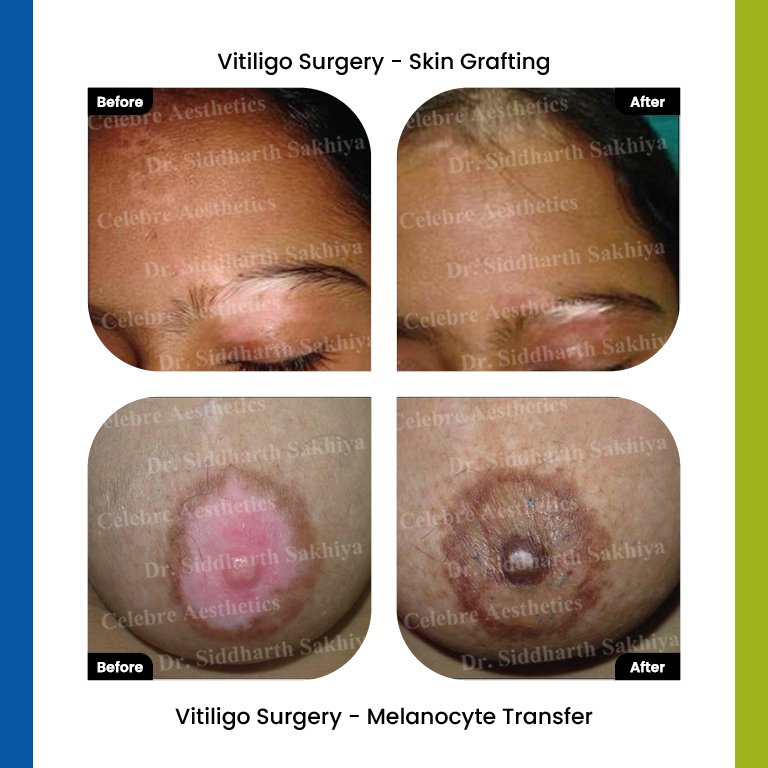
Skin grafting for vitiligo involves transferring a thin layer of healthy pigmented skin to affected areas to restore natural skin color. The procedure is performed under local or general anesthesia to ensure complete comfort. In cases of skin damage caused by burns, trauma, or infection, surgical repair or grafting may be required. Since every vitiligo case is different, Dr. Siddharth Sakhiya at Celebre Aesthetics, Surat creates a personalized treatment plan tailored to each patient’s condition for the best possible results.
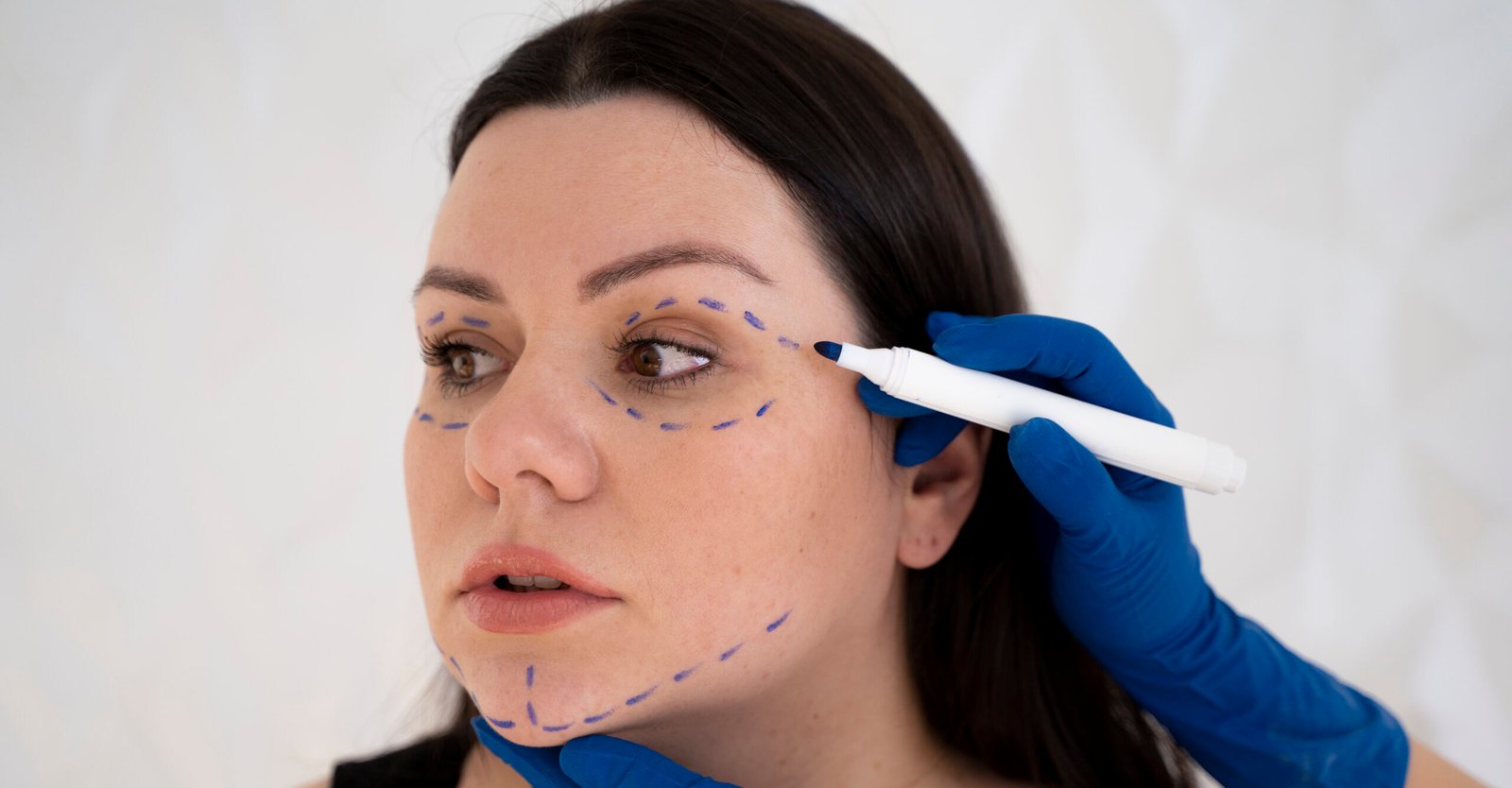
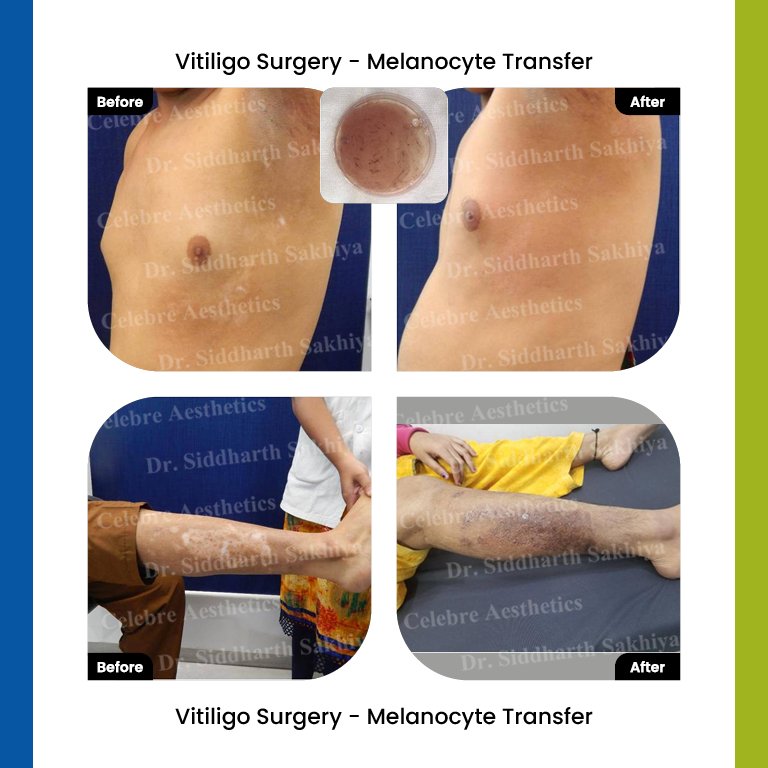
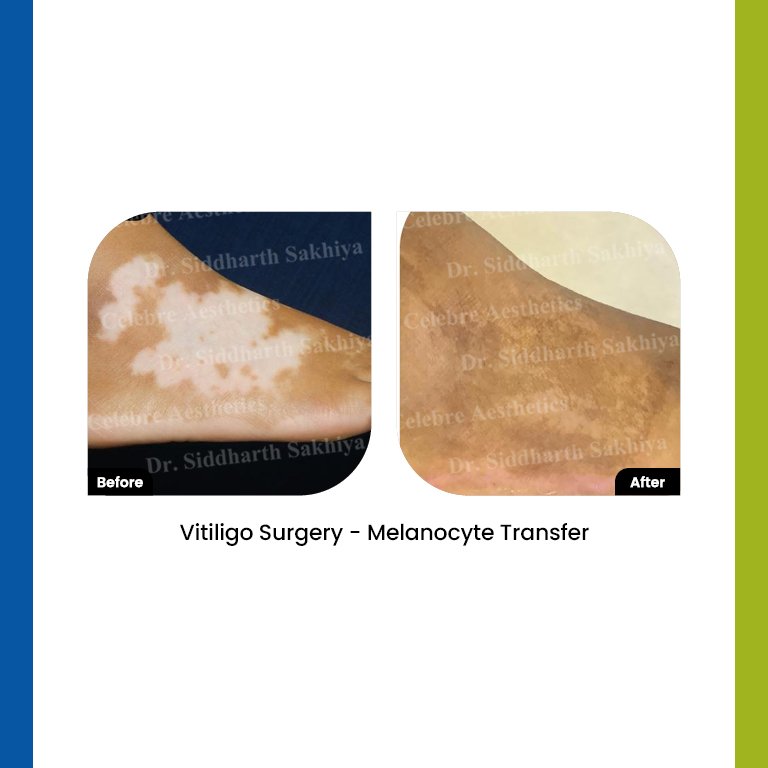
This highly effective procedure involves grafting skin from a smaller, healthy pigmented area (1/3rd the size of a regular skin graft). The next step involves chemically separating melanocytes from the skin graft. Subsequently, the depigmented skin from the affected area is removed, and the transplanted melanocytes take its place. While this method delivers excellent results, the visible outcome requires time. Typically, the full results become apparent after 2-4 months.
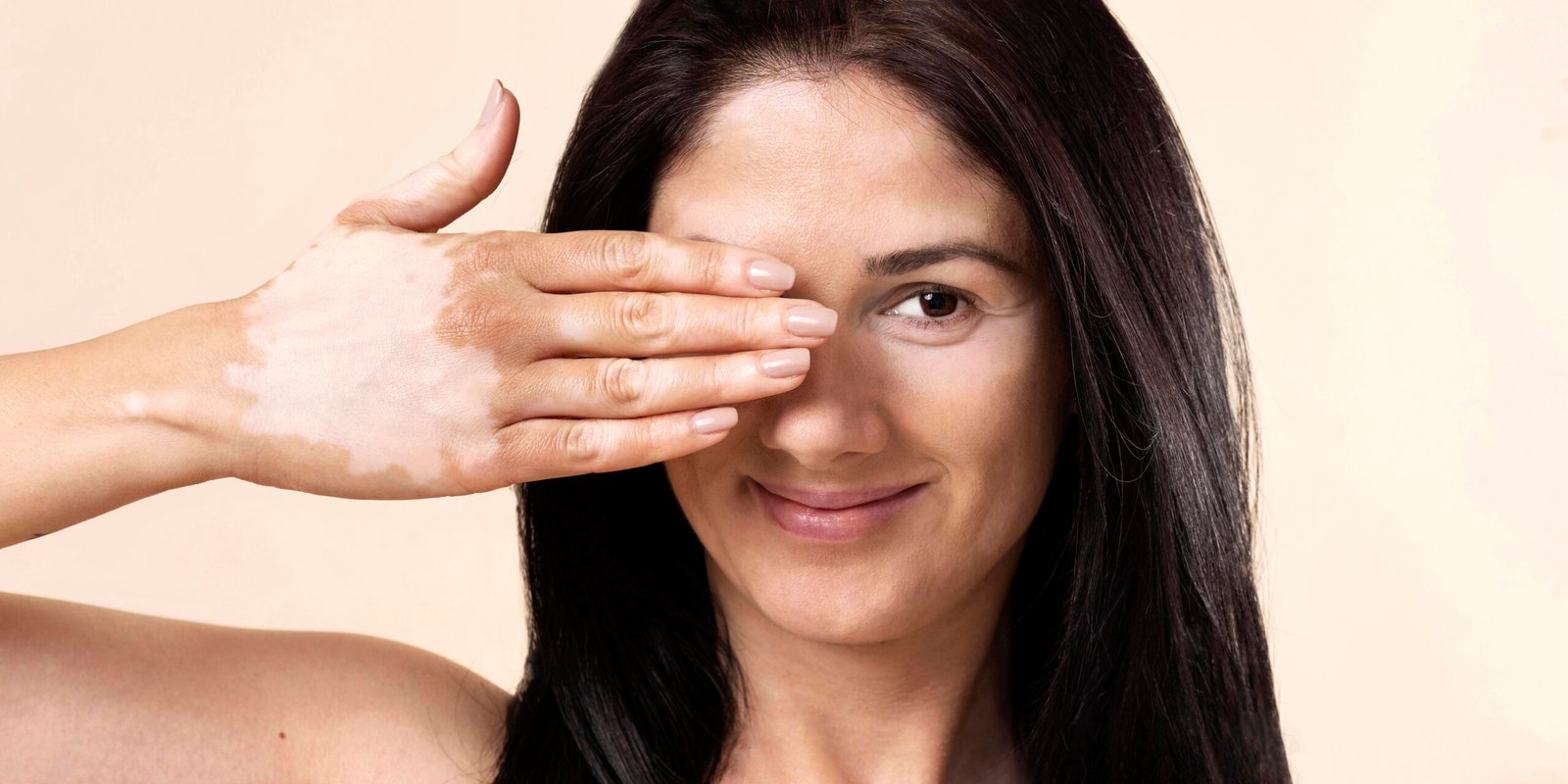
Vitiligo is a skin condition that affects the melanin-producing cells in the body. These cells are responsible for determining the color and complexion of the skin. In vitiligo, these cells are either destroyed or die, leading to a halt in melanin production. As a result, white patches develop on the skin, which can gradually expand and affect the entire body. Additionally, vitiligo can also cause premature graying of hair on the scalp, eyebrows, and even eyelids, with the color fading away.
While vitiligo is not a life-threatening condition, it can have a significant impact on an individual’s self-esteem and confidence. The pressure to conform to societal standards of physical perfection can intensify as the skin develops patchy and uneven areas.
Vitiligo’s exact cause is still unknown, but it may be linked to genetic factors, autoimmune conditions, or external triggers like sunburn, chemical exposure, or environmental stress.
Common symptoms include white patches on areas such as the face, hands, and body openings, along with premature graying of hair and loss of pigment in the mouth’s mucous membranes.
Vitiligo has different types, including Universal vitiligo (affecting the entire body), Generalized vitiligo (spreading symmetrically across multiple areas), Segmental vitiligo (limited to one side of the body and usually stops progressing), and Localized vitiligo (confined to small, specific areas).
The spread varies from person to person. Although vitiligo has no permanent cure, early treatment can help control its spread and improve skin pigmentation.
Consultation is a key step in Vitiligo treatment at Celebre Aesthetics. Dr. Siddharth Sakhiya conducts detailed one-on-one consultations to understand the root cause, medical history, and current condition of each patient. Based on this evaluation, he creates a personalized treatment plan and clearly explains achievable results. Transparency and patient awareness are always prioritized to help patients make informed decisions.
Before commencing with the procedure, Dr. Siddharth Sakhiya will require a comprehensive medical history from the patient. It’s crucial to disclose any prior cosmetic procedures that have been undergone. Additionally, the patient may be recommended to undergo specific blood tests to rule out any underlying health concerns.
To ensure patient safety, it’s essential to inform the doctor about any potential allergies or sensitivities well in advance of the procedure.
Recovery depends on the treatment method used. After phototherapy, mild redness or soreness may occur and is managed with prescribed creams. Skin grafting requires a short observation period, proper wound care, pain management, and avoiding strain on the treated area. For Non-Cultured Melanocyte Transfer, dressing is kept for a week, followed by phototherapy for 3–4 months as repigmentation develops. Following Dr. Sakhiya’s aftercare instructions is essential for smooth and effective recovery.
Phototherapy may cause temporary redness, soreness, itching, or a mild burning sensation, which usually subsides within a few hours. In skin grafting or non-cultured melanocyte transfer, there is a small risk of graft rejection due to factors like poor blood flow or movement of the graft. At Celebre Aesthetics, Surat, all necessary precautions are taken to minimize these risks and ensure safe outcomes.